Locks usually warn you for months before they fail, and Fort Collins freeze-thaw cycles speed up the wear. Here are 10 signs to watch, how to check each one, and whether to rekey or replace.
Quick Answer
Replace a home lock when the hardware is failing. Signs include a key that sticks after lubricant, a deadbolt that drags with the door open, a knob that stays loose, rust, pry marks or snapped keys. If the lock works but someone else may have a key, rekey it instead. Rekeying in Fort Collins is $25–$35 per cylinder.
Key Takeaways
- Rekey when the lock works but key control is the problem. Replace when the hardware itself is failing.
- A deadbolt that drags only with the door closed usually needs a strike plate adjustment, not a new lock.
- Many newer Fort Collins homes came with a builder-grade Grade 3 deadbolt on the front door.
- Rekeying a typical home costs $100–$200, compared with $400–$700 to replace all the hardware.
- Every price is a flat rate quoted by phone, with no night, weekend or holiday surcharge.
How do you know if a lock needs replacing or just rekeying?
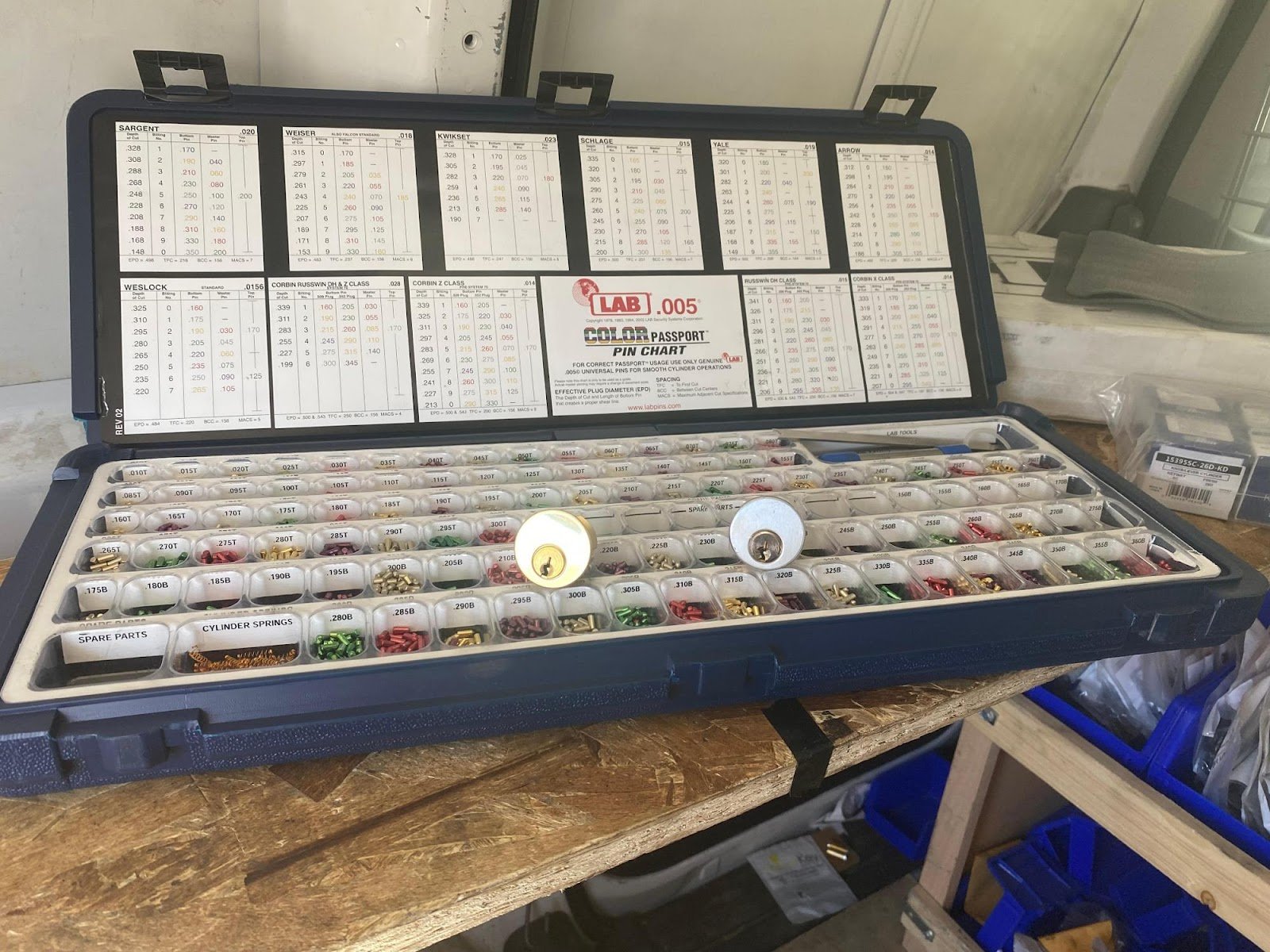
Ask one question: is the lock failing, or is the key the problem? Rekeying changes the pins inside the cylinder so old keys stop working. It fixes a key control problem for far less. Replacing swaps the whole lock and fixes a hardware problem: worn parts, rust, damage or a weak grade.
Which signs mean your lock is wearing out?
1. Your key sticks or you have to jiggle it
A key that needs jiggling usually means worn pins or dirt inside the cylinder. Left alone, a sticking lock is a common way keys end up snapping inside the cylinder.
Check it yourself: Put a dry graphite or Teflon lubricant into the keyway and work the key 10 times. Try a second key too. If both keys now turn smoothly, the lock was just dirty.
Verdict: Lubricate first. If it still sticks, a rekey with new pins often fixes it. Replace the lock if the cylinder housing itself is worn or loose.
2. Rust or corrosion around the cylinder or deadbolt
Rust on the lock face is a sign that moisture is getting inside. Snow melts on a sunny Fort Collins afternoon, the water runs into the keyway, and it refreezes overnight. Rust weakens the small springs that push the pins back into place.
Check it yourself: Look closely at the keyway, the bolt and the screws. Surface rust on the finish is cosmetic. Rust inside the keyway, or a bolt that grinds as it moves, is not.
Verdict: Clean and lubricate cosmetic rust. Replace the lock if rust is inside the keyway or the lock stiffens in cold weather.
3. The deadbolt is hard to throw or will not fully extend
A deadbolt should slide with one finger. If it takes your whole hand, either the door has moved or the bolt is worn. Door frames in older Fort Collins homes, such as in Old Town and Midtown, often settle over the years.
Check it yourself: Open the door and turn the thumb turn. If the bolt moves smoothly with the door open but drags with it closed, the strike plate is out of line. If it drags with the door open too, the bolt mechanism is worn.
Verdict: A strike plate adjustment is $25–$60 and saves the lock. A bolt that drags with the door open needs a new deadbolt.
4. The knob or lever wobbles
A loose knob means either loose screws, which years of use back out, or a broken part inside. A cracked cam or spindle inside the lock feels the same from the outside but cannot be tightened.
Check it yourself: Tighten the screws on the inside rose or plate with a screwdriver. If the knob is still loose afterward, the internal parts are failing.
Verdict: Tighten first. If the wobble stays, replace the lock. A loose exterior knob is a weak point you should not ignore.
Which signs mean your lock is too weak for the door?
5. The front door has builder-grade Grade 3 hardware
Many newer Fort Collins homes came with a builder-grade Grade 3 deadbolt on the front door. ANSI/BHMA grades test locks for durability, strength and finish. Grade 3 is the lowest residential grade. Grade 1 is the highest, tested for the most cycles and the hardest strikes.
Check it yourself: Look for the grade on the packaging or the maker's site for your model. If you live in a newer subdivision such as Rigden Farm, Fossil Creek, or Water Valley in Windsor, and never changed the locks, assume builder grade.
Verdict: Replace the front-door deadbolt with Grade 1 and add a reinforced strike plate with 3-inch screws into the frame stud. Our deadbolt vs smart lock comparison explains the grades in more detail.
6. The lock is 20 or more years old
Age alone is not a reason to replace a lock, but age plus any other sign usually is. An older lock has had decades of freeze-thaw cycles and daily use.
Check it yourself: Run the 5-minute lock check below. If an old lock passes every step, it can stay. If it fails one, plan to replace it.
Verdict: Rekey an old lock that still works well. Replace it if it also sticks, wobbles, rusts or has a deadbolt that drags.
7. Your smart lock drains batteries or the motor struggles
Batteries that die every few weeks or a motor that strains usually mean the bolt is rubbing on the strike. Cold weather adds to it, because batteries lose power faster in winter.
Check it yourself: Put in fresh AA batteries (lithium if your lock's maker allows them). Then lock the door by hand with the door open and closed. If the bolt drags only when the door is closed, the problem is alignment, not the lock.
Verdict: Fix alignment and use fresh batteries (lithium if the maker allows) first, and change them each November. If the motor, keypad or app connection still fails, replace the lock. See smart lock installation in Fort Collins.
Which signs mean your lock is a security risk?
8. You lost a key or do not know who has one
This sign is about access, not wear. If a key was lost or never returned, or you just moved in, the lock may be fine but the keys are not. Previous owners, contractors and neighbors may all have copies.
Check it yourself: Count the keys you have and list everyone who might have one. If you cannot account for every copy, treat the lock as compromised.
Verdict: Rekey, do not replace. A single cylinder is $25–$35, and our guide on how to rekey your home after moving walks through the process step by step.
9. Keys bend, crack, snap or only the original works
Keys that bend or snap are a warning about the key, the lock or both. Worn copies are often cut from other copies, so small errors add up until the key barely turns.
Check it yourself: Hold a copy next to an original key. Look for rounded cuts, a bent blade or cracks near the head.
Verdict: Cut new keys from a good original. If a key broke off inside, do not dig at it. Our broken key extraction service removes it, and a door extraction is $60–$120. Rekey or replace only if the cylinder was damaged.
10. You see pry marks, tool scratches or a damaged frame
Fresh scratches around the keyway, a bent strike plate or a split door frame can mean someone tried to get in. Even if the attempt failed, the lock and frame may now be weaker than they look.
Check it yourself: Inspect the lock face, door edge and strike area in good light. Check whether the bolt still fully extends into the frame. If a break-in is happening or anyone is in danger, call 911 first.
Verdict: Replace damaged hardware and reinforce the strike. If keys were also stolen, rekey every lock they fit. Our 24/7 emergency locksmith service handles lock replacement after a break-in day or night. Ask your insurer about any claim.
How do you run a 5-minute lock check?
You can check every exterior lock in about 5 minutes with no tools beyond a screwdriver. Do it twice a year, in October before the first freeze and again in spring.
- Turn every key. Try each key in each lock. Note any that stick, need jiggling or only work at an angle.
- Throw every deadbolt twice. Once with the door open, once with it closed. Compare how each one feels.
- Grab every knob and lever. Wiggle it. Tighten the screws if it moves, then try again.
- Look closely. Check for rust, pry marks, a bent strike plate or cracks in the frame around it.
- Count the keys. List every copy and who has it. If any are missing, plan a rekey.
Note which lock failed which step. That list tells us whether you need a rekey, an adjustment or a new lock.
Should you rekey or replace, and what does each cost?
Rekey if the lock works; replace if it does not. For a typical Fort Collins home, rekeying costs $100–$200, compared with $400–$700 to replace all the hardware. Ranges for the jobs in this article:
| Service | Typical range | When it fits |
|---|---|---|
| Single cylinder rekey | $25–$35 | The lock works, but a key is lost or unaccounted for |
| Full home rekey (5–7 cylinders) | $100–$200 | You moved in or want every lock on one new key |
| Strike plate adjustment | $25–$60 | The deadbolt drags only when the door is closed |
| Broken-key extraction (door) | $60–$120 | A key snapped off inside the lock |
| Lock replacement, per lock | $100–$300 | Worn, rusted or loose hardware |
| Deadbolt installation | $100–$250 | A worn or damaged deadbolt |
| Grade 1 mechanical deadbolt, supplied and installed | $180–$310 | Upgrading a builder-grade front door |
| High-security cylinder upgrade (Medeco M3, Mul-T-Lock) | $200–$450 | You want keys that hardware stores cannot copy |
| Emergency lock replacement (hardware included) | $150–$350 | After a break-in or forced entry |
| Smart lock installation | $150–$300 + lock | Replacing a failing smart lock or adding one |
Every price is a flat rate quoted on the phone before we dispatch. There is no surcharge for nights, weekends, holidays or bad weather, so the price at 2 AM is the same as the price at 2 PM. The full menu is on our Fort Collins locksmith prices page.
What do we recommend for most Fort Collins homes?
For most homes, replace the front-door deadbolt with Grade 1 and rekey everything else to the same key. The front door gets the most use, so stronger hardware pays off there. Healthy back, garage and basement locks only need new pins.
Replace any other lock that failed the 5-minute check. For the full range of options, from rekeys to new deadbolts, see our residential locksmith service in Fort Collins. Call (970) 397-2002 for a flat-rate quote before we dispatch. Our average response inside Fort Collins city limits is 22 minutes.
Frequently Asked Questions
How long should a front door lock last?
It depends on the grade and how often the door is used. ANSI/BHMA grades test how many lock-and-unlock cycles a lock survives: Grade 1 is tested for the most, Grade 3 for the fewest. A busy front door wears out a Grade 3 deadbolt much sooner than a Grade 1 lock.
Can every lock in my house work with one key?
Usually, yes. Ask for keyed alike, and we rekey each cylinder to one new key. If a lock cannot be matched to the others, we tell you and quote the option before any work starts. Ask for it when you book.
How long does it take to rekey a house?
A single cylinder takes 10–15 minutes on-site. A typical 4-door home keyed alike takes 30–45 minutes on-site. We give you a time estimate with the phone quote.
Do you charge more to change locks at night or on weekends?
No. 970 Locksmith charges the same flat rate 24/7, with no surcharge for nights, weekends, holidays or bad weather. The price is quoted on the phone before we dispatch. If the job on arrival matches what you described, that quote stands. If it differs, we re-quote and you decide.
What do I need to show before you rekey or replace my locks?
A government-issued photo ID that matches the service address. Changing a lock decides who can get into a home, so we check this on every residential job. If we cannot verify that you live at or own the property, we refuse the work.
Need a locksmith in Fort Collins?
Mobile dispatch 24/7 across Fort Collins, Loveland, Windsor, Timnath, Greeley and nearby towns. Flat rate quoted by phone before we dispatch.
Call (970) 397-2002